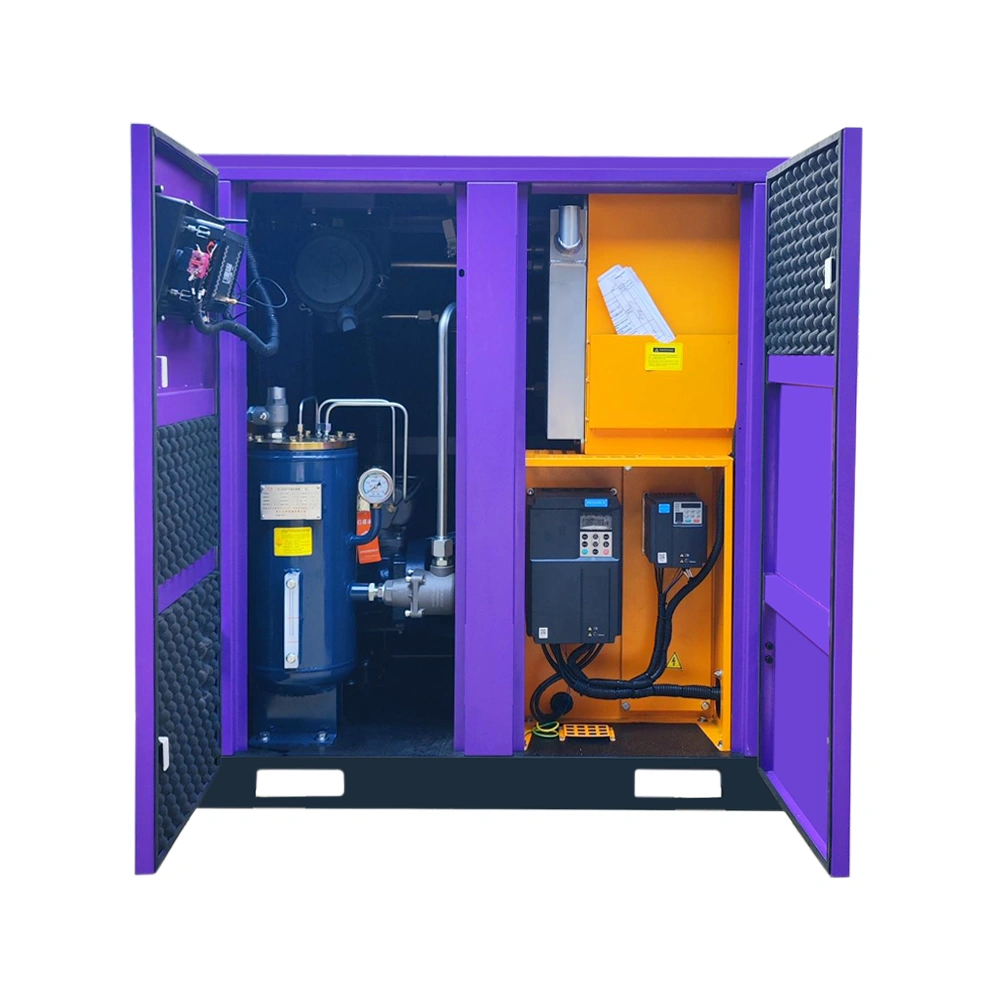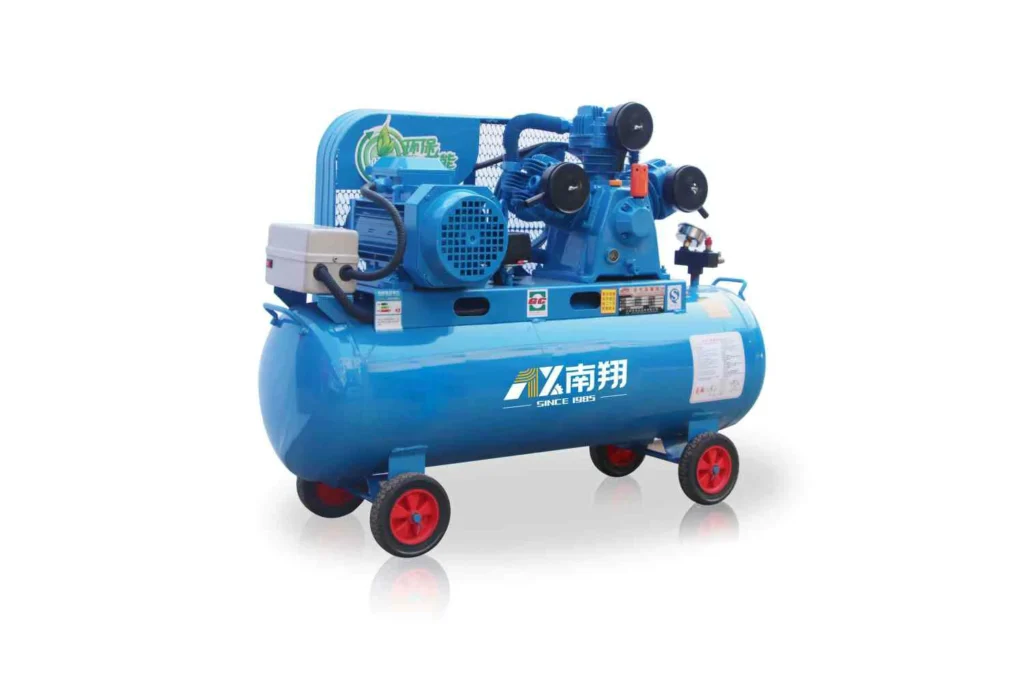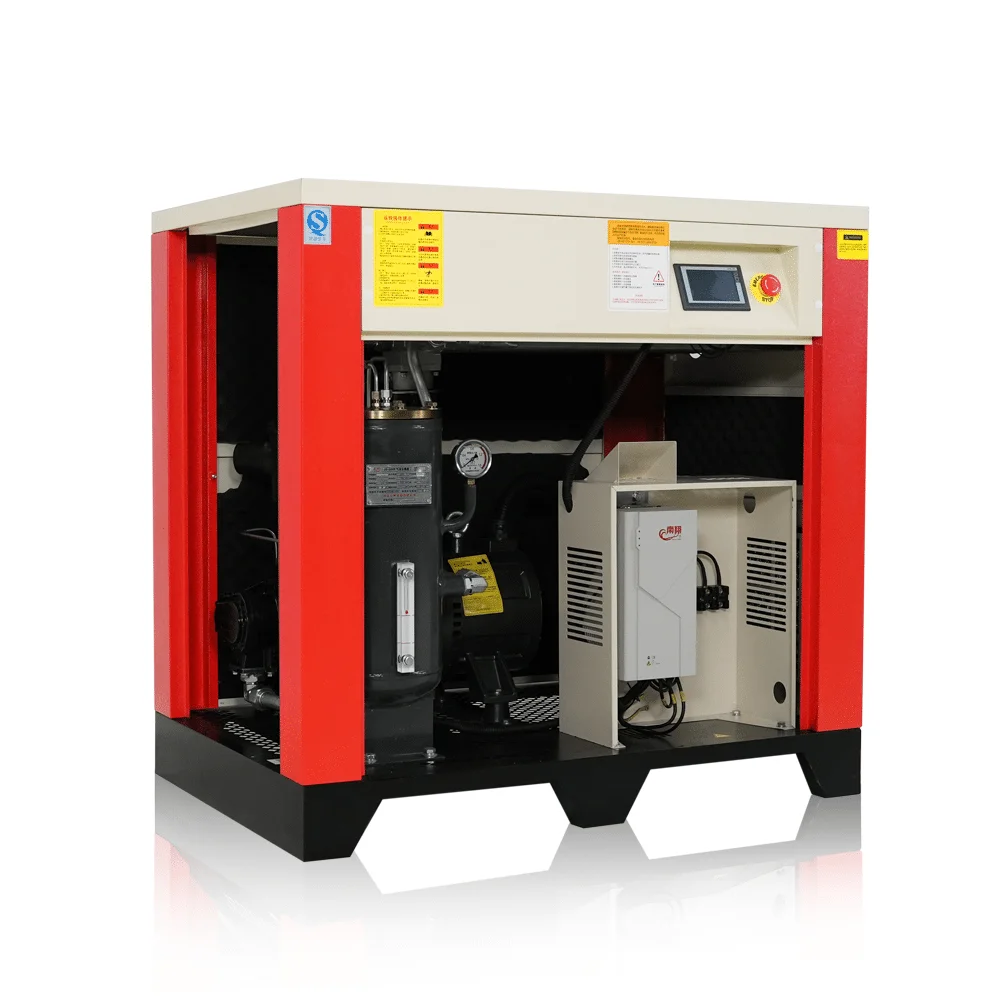
The commonly used types of compressors include screw compressors, piston compressors, and centrifugal compressors. These types of compressors each have their applicable scenarios:
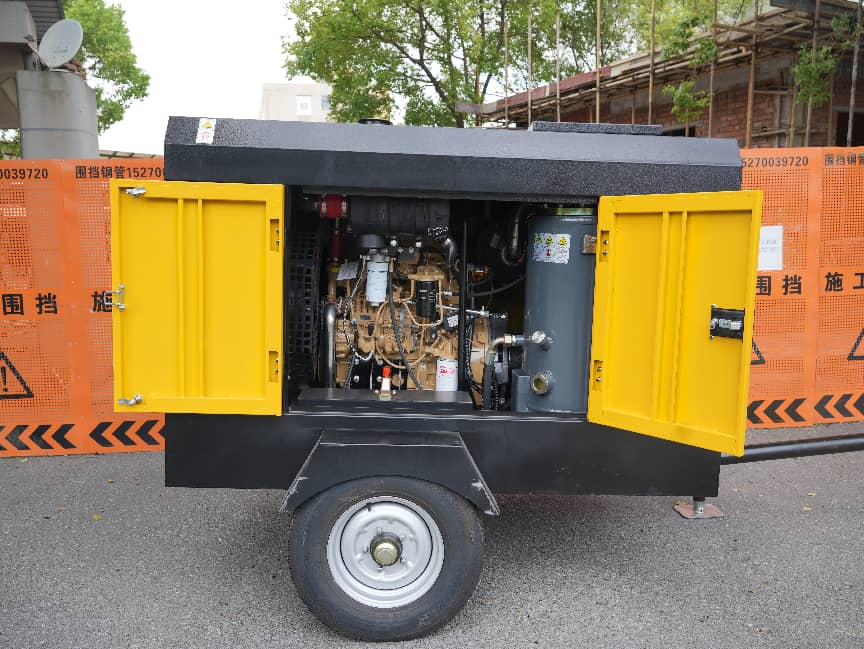
Screw Compressor:
Screw compressor is a common type of industrial compressor that compresses gas through the rotation of two screws. This type of compressor is usually suitable for small and medium-sized industrial applications, such as pharmaceuticals, food processing, automotive manufacturing, and some industrial production lines. It is a reliable and efficient type of industrial compressor.
How It Works
Two helical rotors—male and female—mesh together inside a housing. As they rotate, air gets trapped between the rotors and the casing. The space gradually shrinks, compressing the air before discharge.
No valves, no pistons moving back and forth. Just continuous rotation.
Key Characteristics
Screw compressors run smoothly and quietly (relatively speaking). They’re designed for continuous duty—meaning they can operate for extended periods without overheating or excessive wear.
Some notable features:
Consistent airflow with minimal pulsation
Lower maintenance compared to reciprocating types
Available in oil-injected and oil-free variants
Longer operational lifespan when properly maintained
Factories that need constant compressed air often choose screw compressors. They handle demanding workloads without complaining much.
Common Applications
Manufacturing plants, food processing facilities, automotive assembly lines. Anywhere requiring steady, reliable air supply throughout the day. Smaller rotary screw units also appear in workshops needing more capacity than portable compressors provide.
Piston Compressor
Piston compressor is a common type of industrial compressor that compresses gas through the reciprocating motion of the piston. This type of compressor is usually suitable for industrial compressor types with high pressure and high flow demand, stability, and durability, suitable for industrial applications in industries such as chemical, petroleum, and natural gas.
How It Works
A piston moves up and down inside a cylinder—pretty similar to a car engine, actually. When the piston descends, air enters through an intake valve. When it rises, the air compresses and exits through a discharge valve.
Simple mechanical principle. Effective results.
Single-Stage vs. Two-Stage
Single-stage compressors compress air once before sending it to the tank. Good enough for many applications.
Two-stage models? The air goes through compression twice—first cylinder, intercooler, second cylinder. This produces higher pressure (often 175 PSI or more) while reducing heat buildup.
| Feature | Single-Stage | Two-Stage |
|---|---|---|
| Max PSI | Around 125 | 175+ |
| Efficiency | Moderate | Higher |
| Cost | Lower | Higher |
| Best For | Light-medium tasks | Heavy-duty industrial |
Pros and Cons
Piston compressors are affordable and widely available. Repairs are straightforward since the technology is well understood. However, they tend to run louder than screw types and aren’t ideal for continuous operation—duty cycle limitations apply.
They work great for:
1. Home garages and workshops
2. Small construction projects
3. Intermittent industrial tasks
4. Applications where budget matters most
Centrifugal Compressor
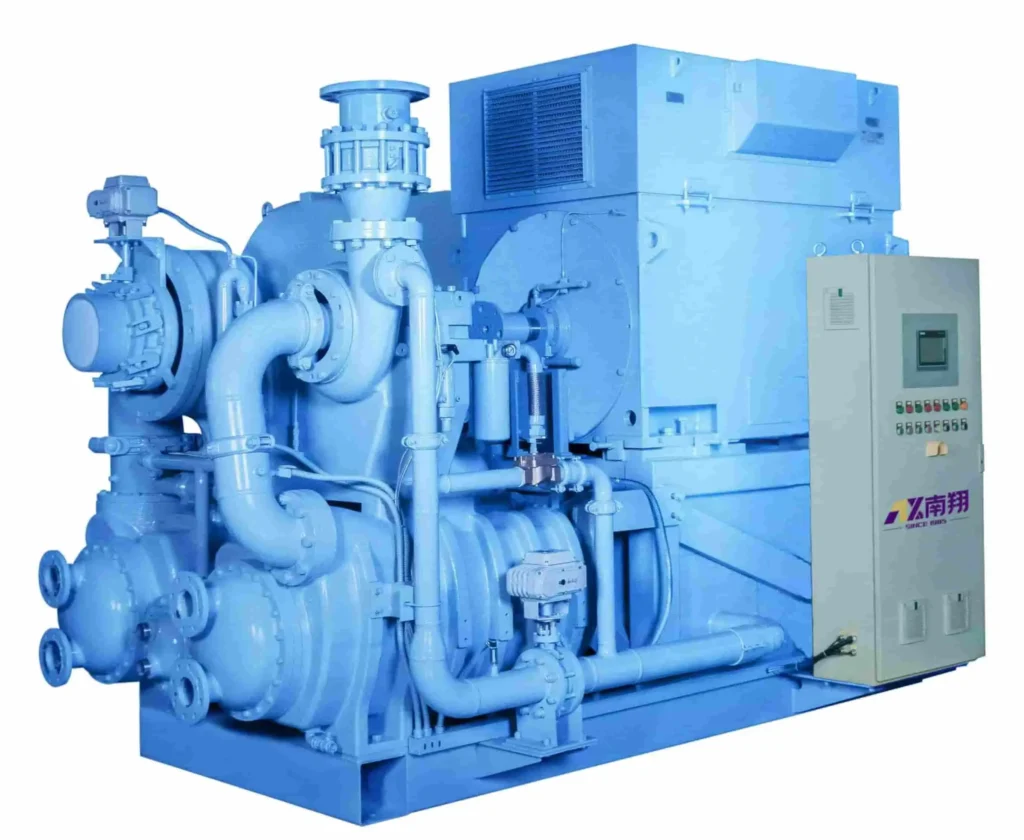
Centrifugal compressor is a common industrial compressor that compresses gas through centrifugal force. The centrifugal compressor is a type of industrial compressor suitable for high flow demand, high efficiency, and stability, and for large-scale industrial applications such as air conditioning refrigeration, liquefied natural gas, and chemical production.
How It Works
Instead of trapping and squeezing air, centrifugal compressors use velocity. A high-speed impeller spins rapidly—sometimes exceeding 50,000 RPM. Air enters the center and gets thrown outward by centrifugal force.
This accelerated air then passes through a diffuser, where velocity converts into pressure. Multiple stages can be added for higher compression ratios.
Where They’re Used
These machines handle massive air volumes. They’re not something a typical workshop needs—or could even justify purchasing.
Typical environments include:
• Oil refineries and petrochemical plants
• Large manufacturing facilities
• Power generation stations
• HVAC systems for commercial buildings
Centrifugal compressors excel when demand is consistently high. They’re efficient at scale but lose that advantage under variable loads.
Considerations
The initial investment is substantial. Installation requires expertise. But for operations needing thousands of CFM continuously, centrifugal air compressors often prove most economical over time.
They’re also inherently oil-free in the compression chamber—important for industries like pharmaceuticals or food production.
Quick Comparison
| Type | Mechanism | Best For | Noise | Maintenance |
|---|---|---|---|---|
| Screw | Rotating helical rotors | Continuous industrial use | Moderate | Low-Medium |
| Piston | Reciprocating piston | Intermittent tasks, workshops | High | Medium |
| Centrifugal | High-speed impeller | Large-scale continuous demand | Varies | Specialized |
Which Type Fits Your Needs?
Selecting air compressors really comes down to matching equipment with actual requirements. A few questions help narrow things down:
How many hours per day will it run?
What pressure and volume do your tools or processes need?
Is oil-free air mandatory?
What’s the budget—including long-term maintenance?
Space and noise constraints?
Someone running a small body shop has vastly different needs than a plant manager overseeing continuous production. There’s no universal best choice—just the right fit for specific situations.
FAQ
Which air compressor type is most reliable?
Rotary screw compressors generally offer the best reliability for continuous industrial applications due to fewer moving parts.
Can piston compressors run continuously?
Not recommended. Most have 50-70% duty cycles and need rest periods to prevent overheating.
Are centrifugal compressors oil-free?
Yes, the compression chamber is oil-free, making them suitable for sensitive industries like food and pharmaceuticals.