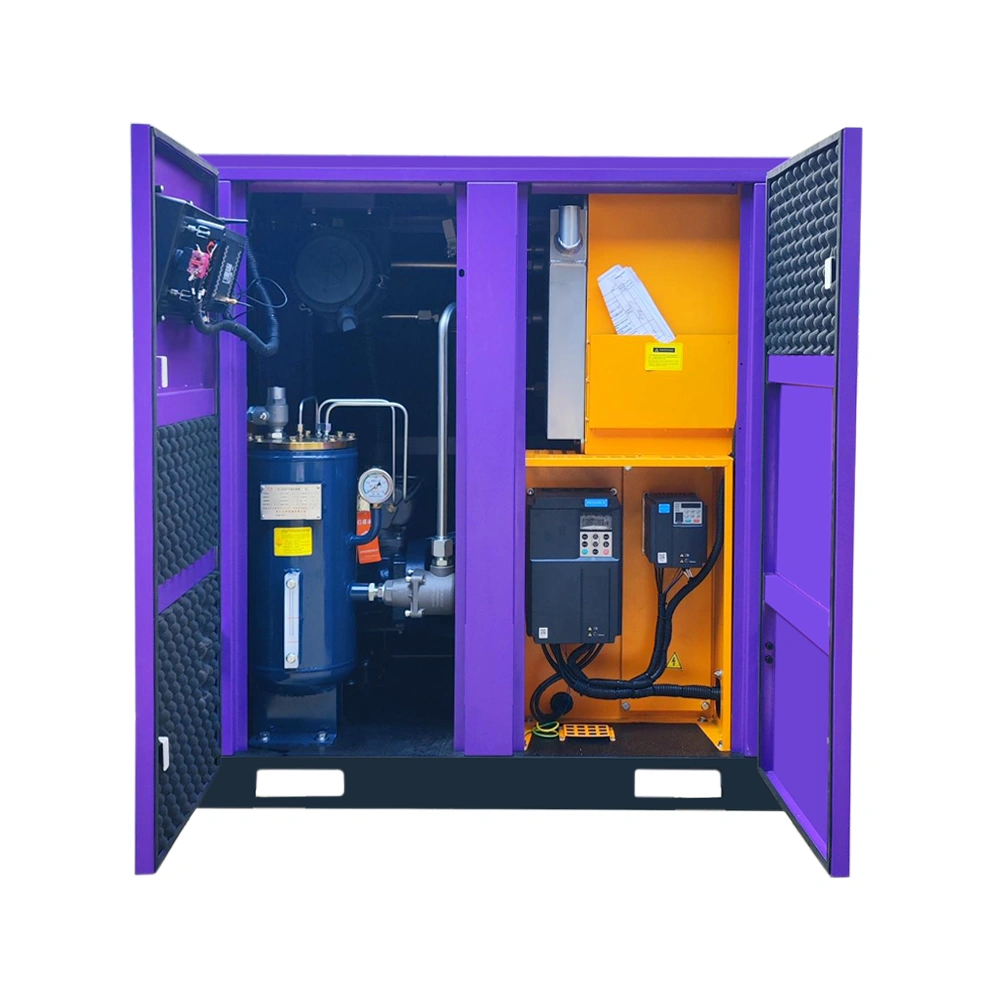
If you’ve ever stood in front of a wall of air compressors — or scrolled through pages of specs online — and thought, “where do I even start?”, you’re not alone. The truth is, there’s no single “best” air compressor. The right choice depends entirely on how you plan to use it.
From small garage workshops to large-scale industrial facilities, compressed air powers everything from nail guns and spray painters to pneumatic conveyor systems and medical equipment. Picking the wrong type doesn’t just mean poor performance — it can mean costly downtime, premature equipment failure, and wasted energy costs over the long run.
This guide walks you through the main types of air compressors, what they’re best suited for, and the key specifications you need to understand before buying.
The Two Core Categories: Positive Displacement vs. Dynamic
Before diving into specific types, it helps to understand the two fundamental operating principles behind all air compressors.
Positive displacement compressors work by trapping air and reducing its volume to build pressure. Dynamic compressors, on the other hand, rely on high-speed rotating impellers to convert kinetic energy into pressure. Most compressors used in workshops, factories, and commercial settings fall into the positive displacement category — but large industrial plants increasingly rely on dynamic compression for its efficiency at scale.
The 4 Main Types of Air Compressors
1. Piston air Compressors(Reciprocating Compressors)
Best for: Small to medium-sized, intermittent applications
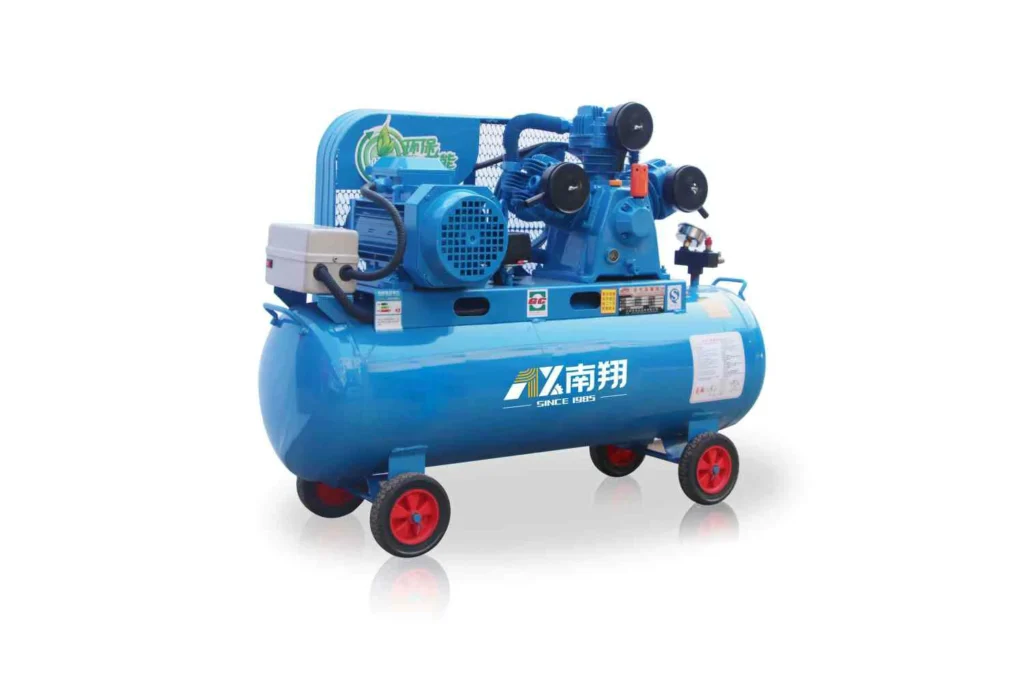
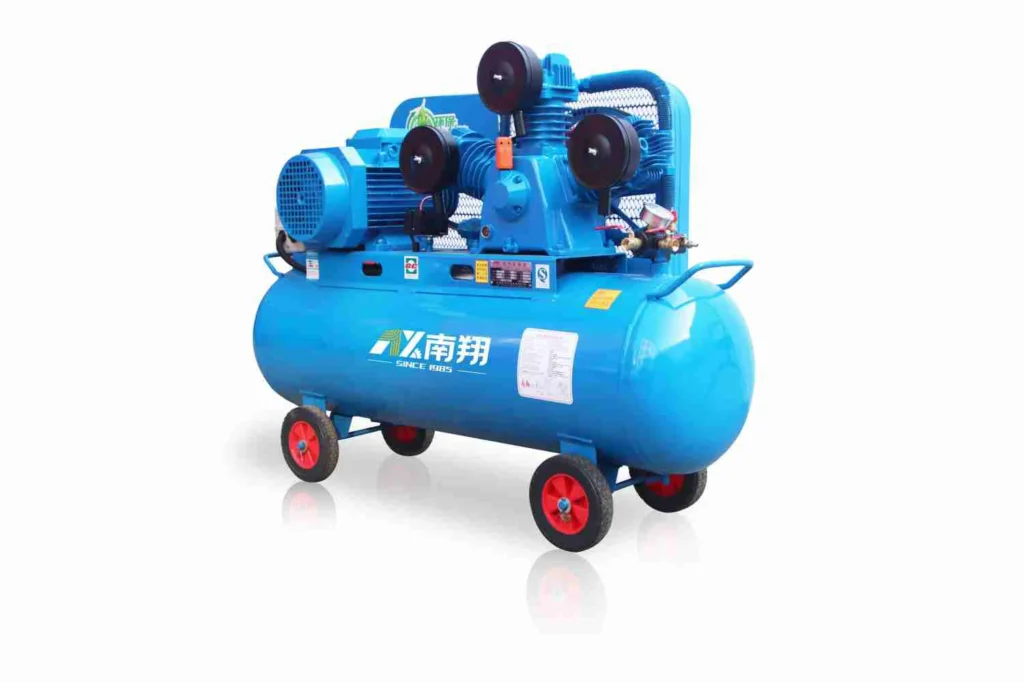
Piston air compressors are the most widely recognized type and a common sight in garages, auto shops, and light manufacturing environments. They use a piston driven by a crankshaft to compress air in a cylinder, and are valued for their affordability, simplicity, and ability to generate high pressures.
They come in two main configurations: single-stage compressors compress air in one stroke, while multi-stage compressors compress air in two or more stages, allowing for higher PSI output — commonly used in high-pressure applications.
One important limitation to be aware of: piston compressors are only meant for intermittent use, operating at about 50–60% of their duty cycle — meaning they run roughly 30–35 minutes per hour and require cooling time between cycles, otherwise they risk overheating.They also tend to run louder than other types, which can be a consideration in shared workspaces.
Pros: Low upfront cost, widely available, capable of high pressure output, oil-free versions available
Cons: Not suited for continuous operation, can be noisy, generates downstream oil if not oil-free
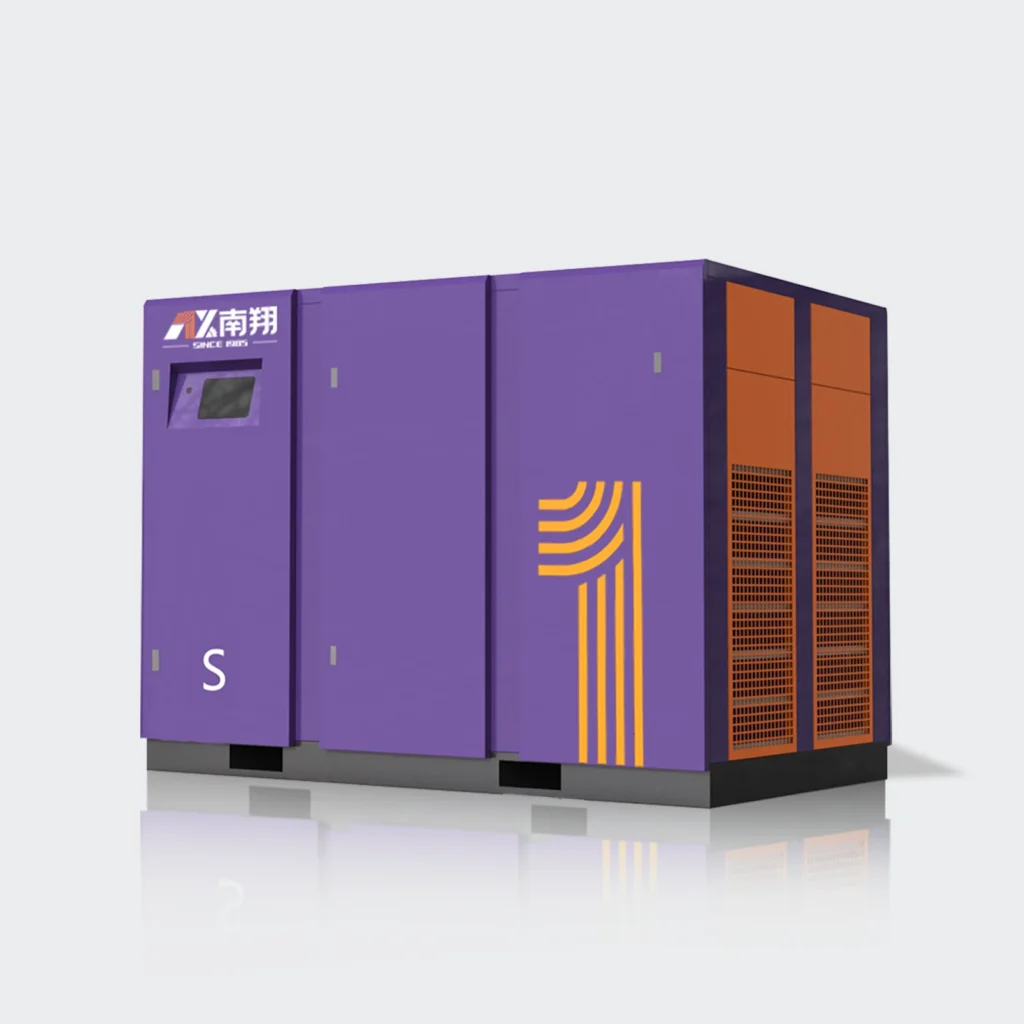
2. Compresores de aire de tornillo rotativo
Best for: Industrial and commercial continuous-use applications
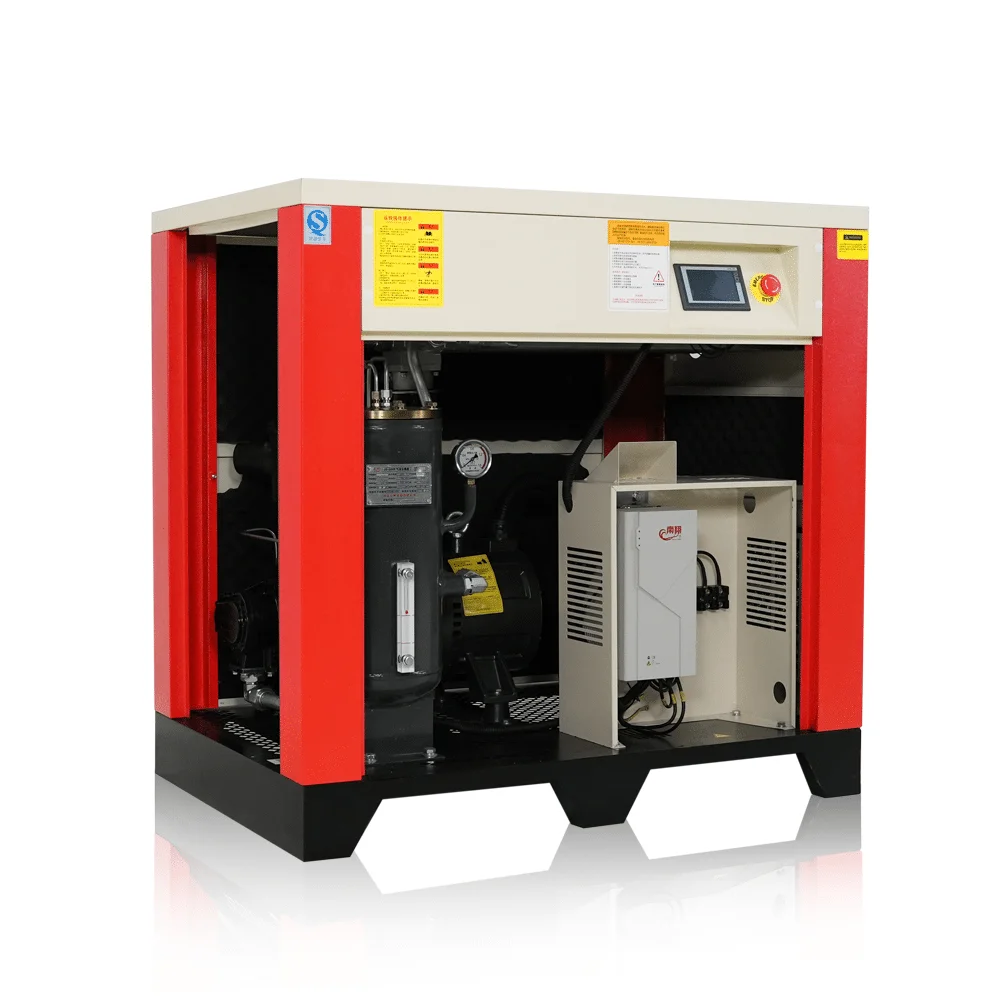
When consistent, all-day air supply is a must, rotary screw compressors are the go-to solution. They utilize two helical screws (rotors) that compress air as it moves through the chamber, and are known for their continuous duty capabilities and high efficiency.
Unlike piston compressors, rotary screw machines can handle a 100% continuous duty cycle — they’re designed and built for reliable, all-day operation. They also run noticeably quieter and come with more configuration options, including variable speed drive (VSD) models that adjust motor speed to match actual air demand — a significant energy-saving feature for operations with fluctuating needs.
Oil-free rotary screw variants are ideal for applications requiring absolutely clean air, such as in the food, pharmaceutical, and electronics industries.
Pros: 100% duty cycle, energy-efficient, low noise, suitable for heavy-duty operations
Cons: Higher initial investment than piston compressors, requires professional installation and servicing
3. Compresores centrífugos
Best for: Large-scale industrial operations requiring very high airflow
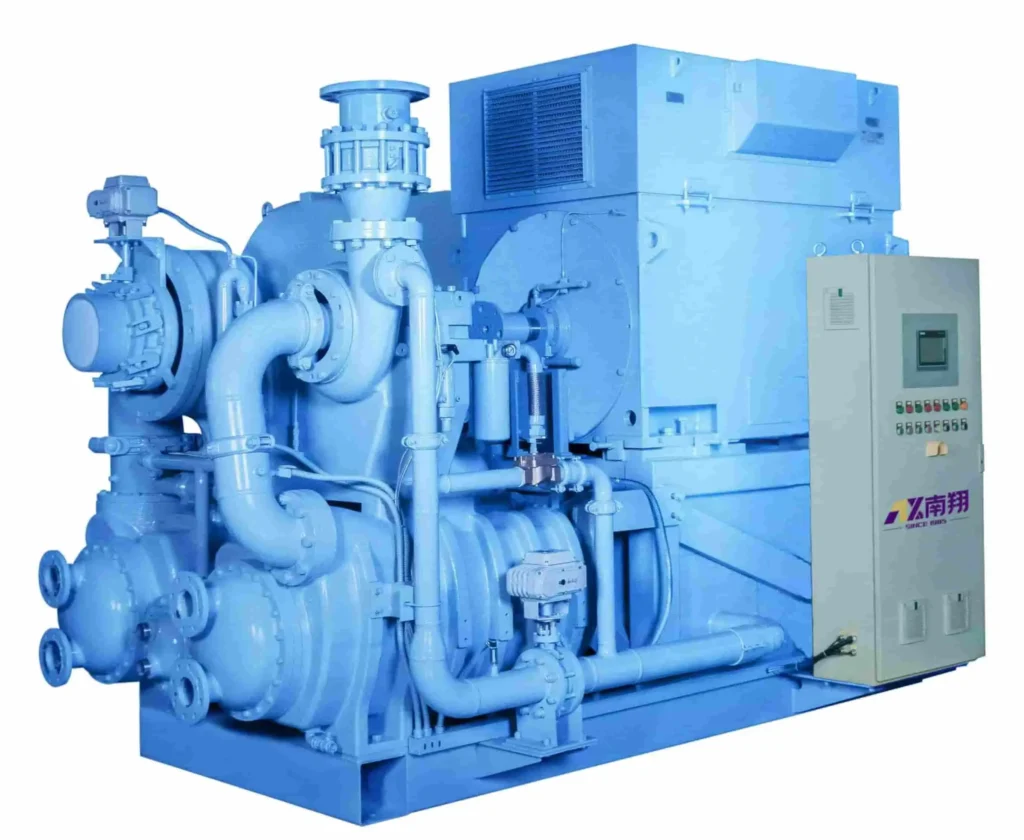
Centrifugal compressors are ideal for large-scale industrial operations requiring steady, continuous high-volume air supply, typically in the 250–6,000 HP range. They use multi-stage impellers to build pressure while continuously cooling air, offering high efficiency and delivering oil-free output.
One of their standout advantages is air purity. They can supply oil-free air classified as Class 0 per ISO 8573-1:2010 — eliminating the risk of oil contamination, which is especially critical for pharmaceuticals, food and beverage processing, electronics manufacturing, and textiles.
From a maintenance standpoint, centrifugal compressors also offer a lower lifecycle burden: oil changes are required only every two to three years, compared to the six- to twelve-month intervals needed for oil-flooded compressors.
Pros: Extremely high flow capacity, energy-efficient at scale, oil-free air output, low maintenance intervals
Cons: High capital cost, complex installation, not practical for small or mid-sized operations
4. Compresores Scroll
Best for: Quiet, steady-flow applications in sensitive environments
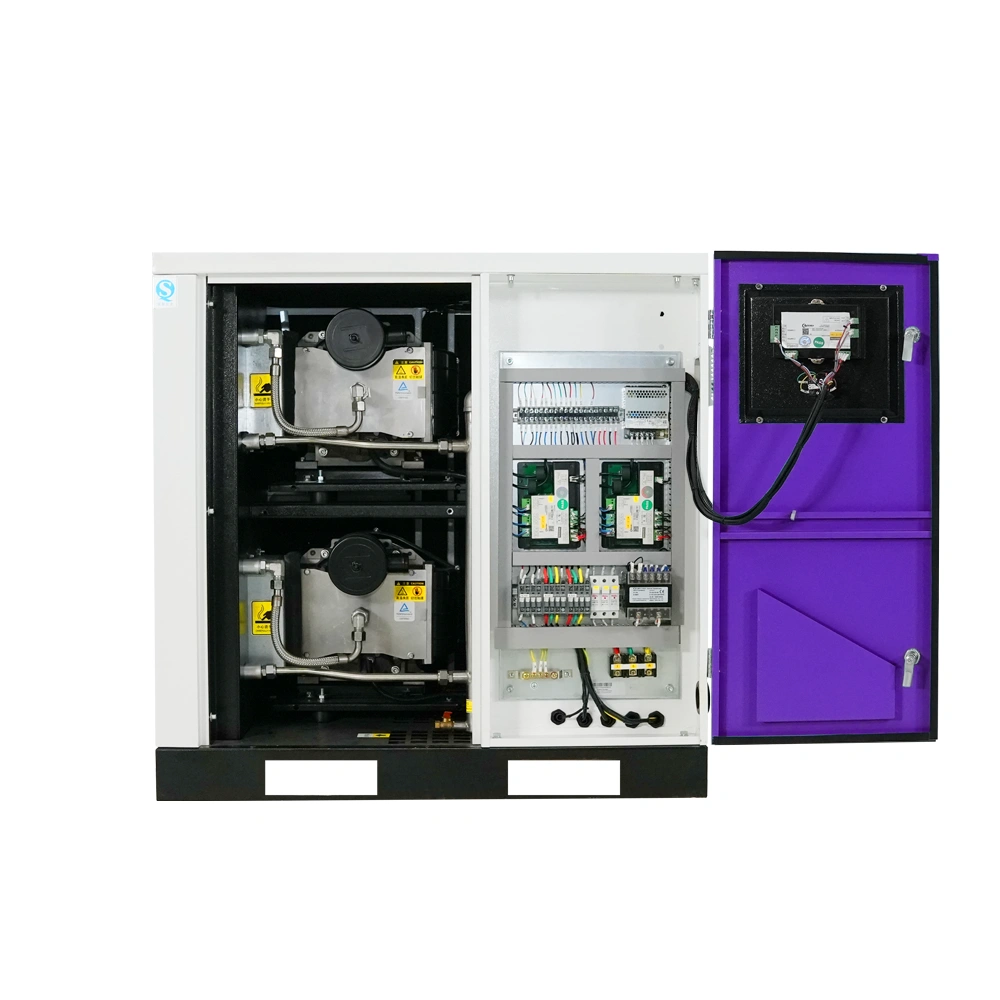
A scroll air compressor uses two spiral-shaped scrolls to compress air. One scroll remains stationary while the other orbits around it, trapping and compressing air in pockets that gradually decrease in size.
This design makes scroll compressors exceptionally smooth and quiet in operation. They’re a popular choice in medical equipment, laboratories, dental offices, and food production facilities — anywhere that demands consistent, clean air without the noise or vibration of piston-based systems. While they don’t match the raw output of rotary screw or centrifugal machines, they offer a refined solution for lower-pressure, precision-dependent applications.
Pros: Very quiet, smooth and consistent airflow, oil-free operation, compact footprint
Cons: Limited to lower-pressure applications, higher cost than piston compressors at equivalent output levels
| Tipo | Lo mejor para | Ciclo de trabajo | Pressure (PSI) | Nivel de ruido | Opción sin aceite | Relative Cost | Typical Industries |
|---|---|---|---|---|---|---|---|
| Reciprocantes (pistón) | Small to medium, intermittent use | 50–60% | Up to 6,000+ PSI | ⚠️ High | ✅ Yes | $ Low | Auto repair, garages, light manufacturing |
| Tornillo giratorio | Uso industrial continuo | 100% | Up to ~150 PSI | ✅ Low | ✅ Yes | $$ Medium | Manufacturing, automotive plants, large workshops |
| Centrífuga | Large-scale, high-volume operations | 100% | Moderate (multi-stage) | ✅ Low–Medium | ✅ Yes (Class 0) | $$$$ Very High | Power generation, petrochemical, pharmaceuticals |
| Desplácese por | Quiet, clean, steady-flow applications | Up to 100% | Low–Medium | ✅ Very Low | ✅ Yes | $$$ Medium–High | Medical, laboratories, dental, food processing |
Key Specs You Must Understand Before Buying
Knowing the compressor types is only half the picture. To make the right purchase, you need to match your actual requirements to the specifications on the data sheet.CFM — The Most Critical Number
CFM (Cubic Feet per Minute) is the volume of air the compressor can deliver at a specific pressure level. It is arguably the most critical specification to match to your tool requirements. To calculate what you need: list every tool you’ll run simultaneously, find their individual CFM requirements, add them up, then add a 30% buffer to account for future growth and air leaks.PSI — Pressure Output
Many popular air tools are engineered for a PSI between 90 and 100. Be sure to check manufacturer specifications, as some equipment may require higher levels — 15 to 30 bar on the mid-range, and 200 to 300 bar on the high end. As a rule of thumb, choose a compressor with around 20% more PSI than your highest tool requirement to avoid pressure drops under load.Duty Cycle — How Long It Can Run
Duty cycle tells you how long a compressor can run continuously within a given timeframe without overheating. A 50% duty cycle means it can run for 30 minutes out of every hour, while a 100% duty cycle means it can run non-stop. For industrial applications with constant air demand, a 100% duty cycle is non-negotiable.Tank Size
A larger tank stores more compressed air, which reduces how often the motor needs to cycle on and off. Smaller tanks cycle more often, which tends to increase motor wear. For intermittent tasks like nailing or inflating, a smaller tank works fine. For sustained operations like spray painting or sandblasting, go larger.Fuente de energía
Air compressors are fueled by diesel, electric, or gas. Gas and diesel models offer slightly higher CFMs but are limited to outdoor use due to the fumes they produce. Electric models are among the most popular as they can be used indoors. For fixed installations, also consider whether you need single-phase (115V/230V) or three-phase power supply.Quick-Reference: Which Type Is Right for You?
| Aplicación | Recommended Type | Key Reason |
|---|---|---|
| 🏠 Home Garage / DIY | Reciprocantes (pistón) | Low cost, easy to use, intermittent use |
| 🔧 Auto Repair Shop | Reciprocating or Rotary Screw | Depends on shop size and air demand volume |
| 🏭 24/7 Production Line | Tornillo giratorio | 100% duty cycle, built for non-stop operation |
| 💊 Pharmaceutical / Food Processing | Oil-Free Rotary Screw or Centrifugal | Contamination-free air required (ISO Class 0) |
| ⚡ Power Plant / Petrochemical | Centrífuga | Ultra-high flow capacity and energy efficiency at scale |
| 🏥 Medical / Laboratory | Desplácese por | Ultra-quiet, oil-free, steady airflow |
| 🚧 Portable / On-Site Work | Reciprocating (Portable) | Lightweight, flexible, no fixed power source needed |
Conclusión
The “best” air compressor is the one that aligns precisely with your operational demands — not the most powerful, the most expensive, or the most popular model on the shelf. Start with your required CFM and PSI, factor in your duty cycle and environment, then match those needs to the appropriate compressor type.Getting the sizing right from day one will save you money on energy bills, reduce maintenance costs, and ensure your tools perform at their best for years to come. If your needs are complex or you’re scaling up operations, consider consulting with a compressed air specialist to audit your system before committing to a purchase.Preguntas frecuentes
What is the most common type of air compressor for small businesses?
Reciprocating (piston) compressors are the most widely used choice for small businesses. They’re affordable, easy to maintain, and available in both oil-lubricated and oil-free versions — making them ideal for auto repair shops, garages, and light manufacturing environments where air demand is intermittent rather than constant.
How do I know if I need a rotary screw compressor instead of a piston compressor?
The key question is how often you need compressed air. If your operation runs compressed air tools or machinery for more than 60% of the time — or requires continuous, uninterrupted airflow — a rotary screw compressor is the better investment. Piston compressors are only rated for a 50–60% duty cycle and need cooling time between uses. Rotary screw models are built for 100% continuous operation without overheating.
What type of air compressor is best for oil-free air output?
If contamination-free air is a priority — such as in pharmaceuticals, food processing, electronics manufacturing, or medical environments — you have three strong options: oil-free reciprocating compressors for lighter loads, oil-free rotary screw compressors for continuous industrial use, and centrifugal compressors for large-scale operations requiring ISO 8573-1 Class 0 certified air. Scroll compressors are also inherently oil-free and well-suited for sensitive, low-pressure applications like laboratories and dental offices.